
As 2025 draws to a close, the year has underscored that archives are both guardians of memory and laboratories of innovation. In a time of uncertainty, resilience has meant embracing curiosity, not just for its own sake, but as an intentional effort to explore new tools, partnerships, and possibilities. Emerging technologies, such as artificial intelligence and advances in digital preservation, have created unprecedented opportunities to amplify access, enhance discovery, and redefine how archives serve communities across disciplines and geographies.
However, technology alone cannot drive progress. As we experiment with new tools, ethics must remain at the center of our efforts. Deploying emerging technology in archival work without careful reflection risks distorting the truth, eroding trust, or reinforcing power imbalances. Innovation must be guided by transparency, accountability, and inclusiveness to ensure responsible progress.
Resilience, innovation, and ethics form the foundation of archives. The University of California, San Francisco’s (UCSF) Archives and Special Collections (ASC) are not static, but agile, serving the university and society by expanding knowledge while safeguarding the university’s values. In 2025, teamwork and integrity powered a bolder vision for UCSF ASC, strengthening our role as a dynamic hub for health sciences scholarship that preserves past knowledge, engages learners, enables collaborative research to meet today’s challenges, and supports the translation of science into patient care.
We invite you to explore the Year in Review that highlights a few of UCSF ASC’s accomplishments.
By the numbers


Collections highlights
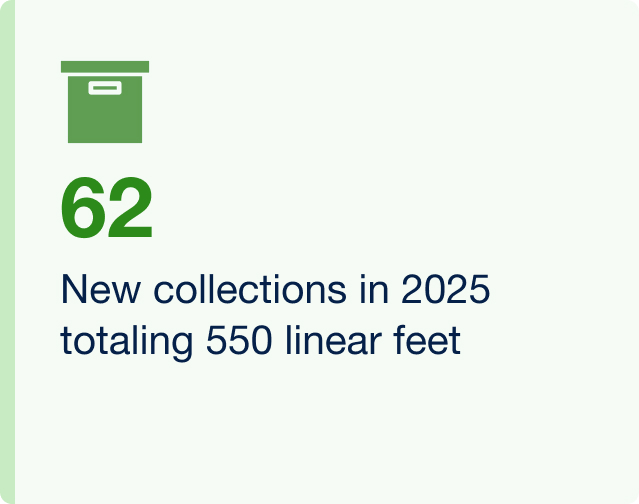
In 2025, Archives and Special Collections expanded physical holdings by acquiring 62 new collections totaling 550 linear feet of materials. Archival processing and large-scale digitization projects enhanced researchers’ access to existing collections locally and remotely.
Notable new acquisition

Howard L. Fields Pain Management Collection (MSS 2025-11)
Consisting of 25 cartons, this collection documents the influential career of Howard L. Fields, MD, PhD, whose work in pain medicine and neuroscience has shaped modern understanding of pain mechanisms and treatment. This acquisition is the first of what we hope will be an expanding set of materials within our broader Pain Management Collection.
New finding aids
Collection guides continue to open doors to research, teaching, and public engagement. Finding aids added in 2025 include:
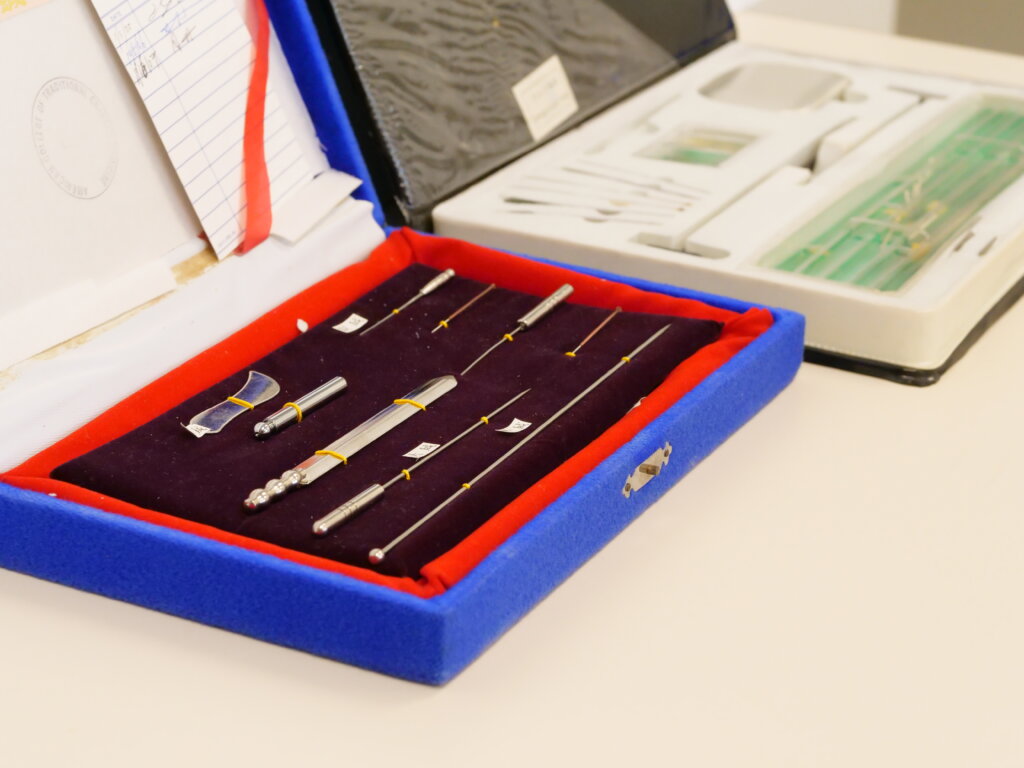
American College of Traditional Chinese Medicine records: Materials from the American College of Traditional Chinese Medicine (1980-2024), the first college in the United States to offer a master’s degree in science in traditional Chinese medicine, including scrolls, photographs, tapes, books, and acupuncture sets.
Donald Wilson (Christopher Colt) Journals: Personal journals of artist Donald Wilson that document his experience living with AIDS (1990-1992), plus photographs and his sister’s book “Brushing Away the Tears.”
Gerald Lenoir Papers: Materials from the nonprofit leader and executive director of SF Black Coalition on AIDS (1989-1995), including the HIV Education and Prevention Project of Alameda County (HEPPAC) anniversary programs, HIV/AIDS reports, and advocacy materials.

Health Access California records: Institutional records and papers of executive director Anthony Wright documenting California’s leading consumer health advocacy organization’s policy work on hospital pricing, ACA implementation, and health reform (early 2000s-2023).
Ichitaro Katsuki Collection: Documents and artifacts from Ichitaro Katsuki, MD, UCSF School of Medicine graduate (1896), including diploma, student notes, photographs, textbook, microscope slides, and 1960s memoir transcripts.

June Fisher Papers: Documents a physician/product designer specializing in occupational health at San Francisco General Hospital and Stanford, focusing on healthcare worker safety during the AIDS crisis and founding a San Francisco Municipal Railway (MUNI) transit worker clinic (1978). Materials span 1994-2004, covering needlestick safety research and transit worker safety studies.

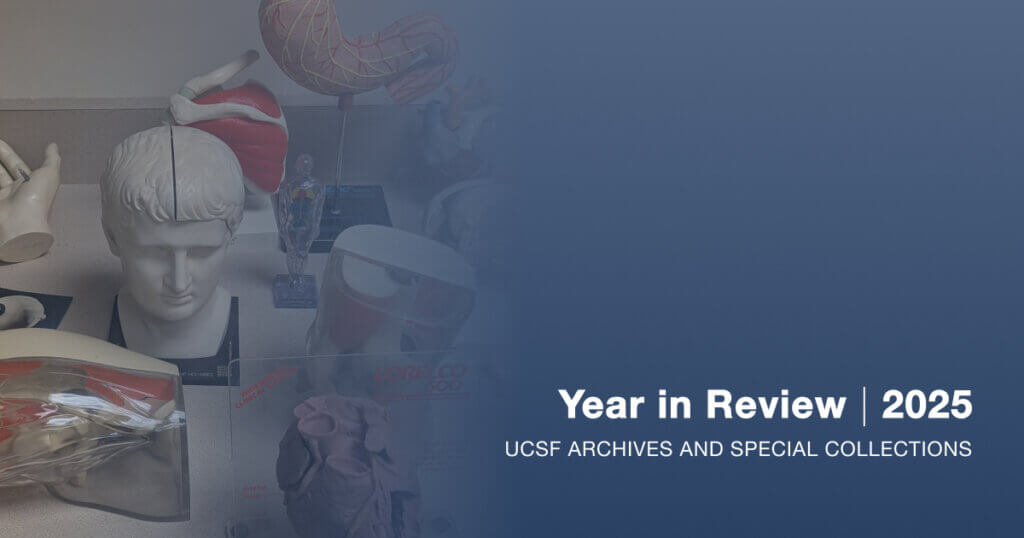
Robert Porcella Collection of anatomical models: Anatomical models and medical artifacts from Robert Porcella, MD, a family doctor and UCSF alumnus (class of 1958). The 1960s-1970s artifacts include models of hand, foot, heart, brain, nasal passage, eye, spine fragments, knee, kidney, and a metal anesthesia mask. Some models retain their original manuals.
Expanding digital access
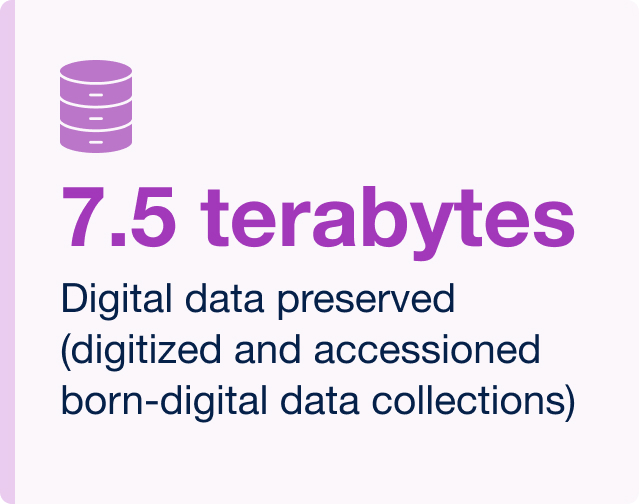
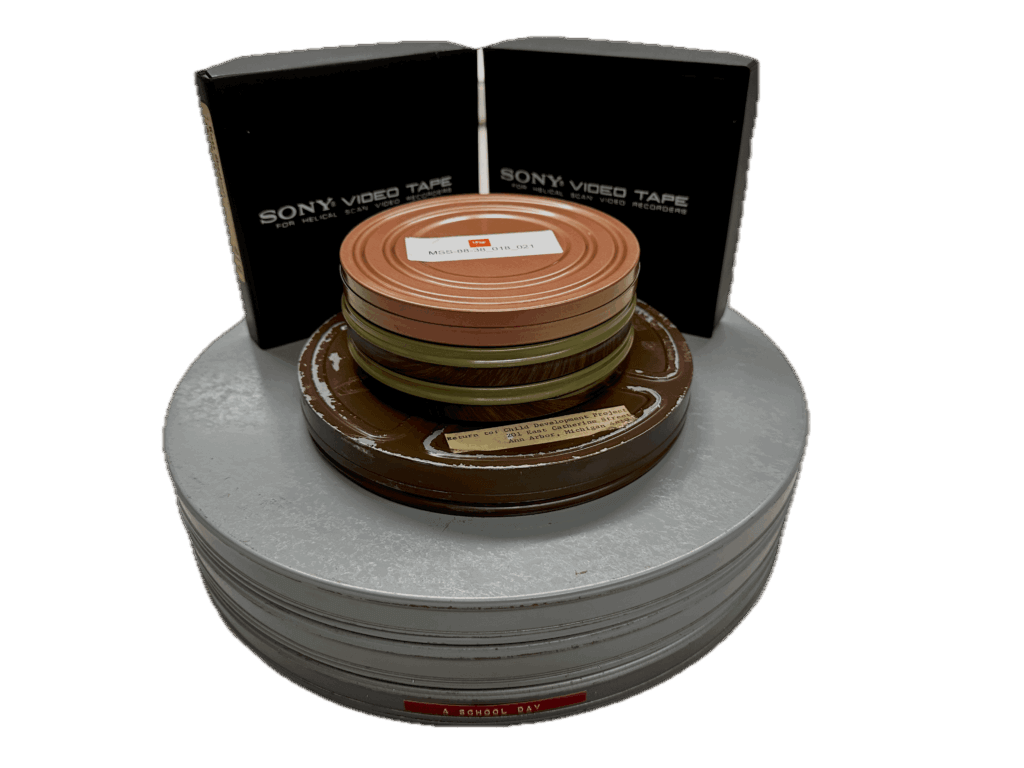
Several significant projects fulfilled on-demand digitization requests and enhanced our born-digital and web archiving capabilities:
Engagement and discovery
Through ASC’s collaborative programming efforts and providing access and exposure to materials from UCSF’s archives, students, researchers, and community members had opportunities to reflect and engage in meaningful conversations on topics such as climate change, disability rights, public health, and corporate influence.
In 2025, we reopened our reading room to accommodate in-person researcher appointments and updated the list of publications and projects that cite materials from UCSF’s archives.
Programs and events
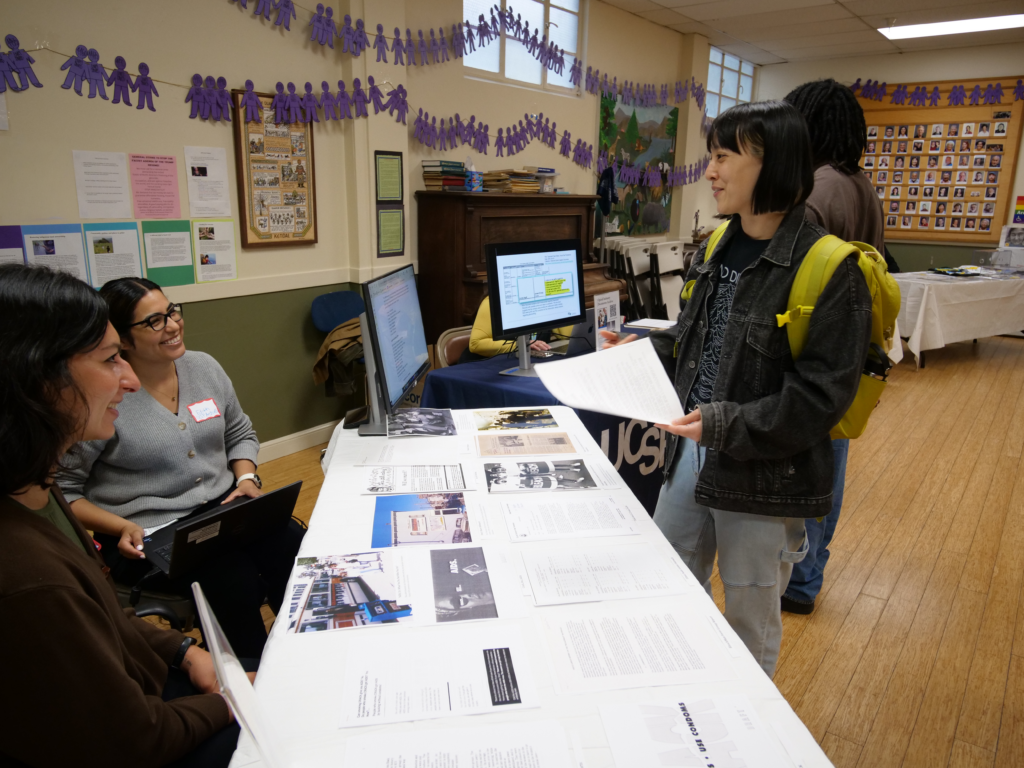
Pop-up at UCSF Mission Bay, In recognition of American Archives Month, archivists brought materials from the AIDS collections, including diaries and materials from AIDS community-based organizations to Mission Bay for UCSF community members to explore up close and ask questions.
Arc/Hive: Documenting Three Decades of Community, Collective Care, and Crisis, Opioid Crisis Community Archive (OCCA) event for community members from harm reduction organizations in Northern California to engage with the archive.
This image has been modified from its original version.
Behind the Spin: How Addictive Industries Harm Kids, book talk with Sue Rusche, author of “Marketing Pleasure: How Addictive Drug Industries Tell Big Lies to Make Big Profits,” followed by a conversation with William Burrough, MD, MPH.

Big Oil, Global Warming, and a Calculated Stitch, an art exhibition by 2024 UCSF Library Artist in Residence Ruth Tabancay and on display June 2025- June 2026 at the UCSF Kalmanovitz Library.
Patient No More: People with Disabilities Securing Civil Rights, an exhibition at the UCSF Kalmanovitz Library exploring the 504 Sit-In, a pivotal protest in disability rights history. This exhibition was organized by the Office of Disability Access in partnership with the UCSF Department of Anesthesia and Perioperative Care and UCSF Library.
Education and research visits
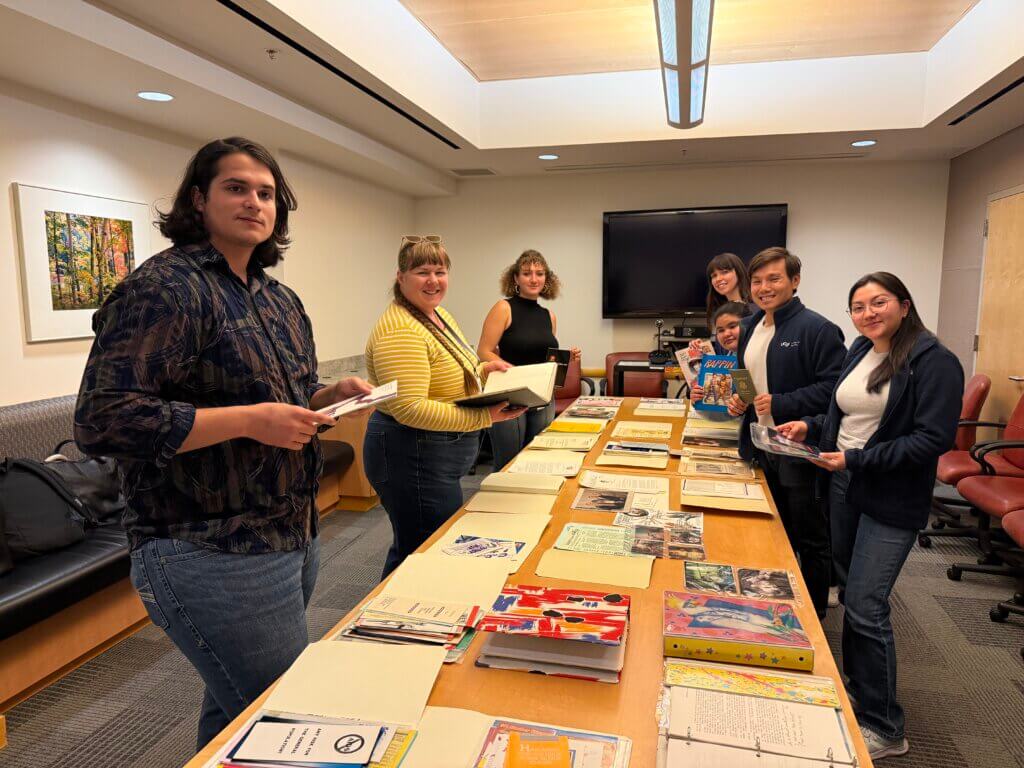
We hosted show-and-tells for variety of groups: from UCSF researchers to San Francisco Unified School District students to librarians visiting from China. Each was an opportunity to demonstrate how archives connect people across boundaries, generations, and disciplines.
- Connecting Art and Anatomy Seminar: Kevin Petti, PhD, and 10 attendees from the Connecting Art and Anatomy in Italy seminar visited for a show-and-tell session featuring rare anatomical atlases.
- CFAR Scholars Summer Program: Seven scholars participated in an interactive session with materials from the AIDS History Project.
- BAYCAT interns: Ten San Francisco Unified School District students from the BAYCAT internship program toured the UCSF Library’s Archives, Tech Commons, and the Makers Lab.
- Chinese Librarians Scholarly Exchange Program: Twelve visiting academic librarians from China explored the UCSF Library and Archives and Special Collections as part of an international exchange program.
- Rutishauser HIV Immunology Lab (UCSF ZSFG): Twelve researchers visited for a show-and-tell session highlighting materials from the AIDS History Project, connecting archival history with ongoing HIV research.
Thank you so much for taking time to show us the wonderful archives. We really appreciated it and learned so much!
Rutishauser Lab


Extending our reach
As stewards of history, memory, and cultural heritage, we believe our work encompasses supporting the communities we serve by engaging outside of the archives. This year, our staff volunteered at:

- AIDS Walk San Francisco 2025
- UCSF Student Food Market
- St. Anthony Foundation
Major initiatives
Return of native cultural items
ASC has been facilitating the return of native cultural items. This May, UCSF returned two masks that originated from the ancestral homelands of the Yuułuʔiłʔatḥ (Ucluelet First Nation), areas also known as Vancouver Island, British Columbia. Read the story in Canada’s oldest First Nations newspaper.
Artist in Residence program
The Artist in Residence program promotes health humanities by exposing and re-purposing historical materials preserved in the archives and special collections. Through collaboration with the UCSF Makers Lab, the artist creates work exploring connections between art and healing, examines the process of scientific discovery, addresses contemporary issues in health care inspired by UCSF’s holdings.
From the artists

Opioid Crisis Community Archive
The Opioid Crisis Community Archive (OCCA) project team recruited and trained five community partner organizations to co-design a set of archives that represent over two decades of community response to the opioid crisis in Northern California. The project team inventoried materials, organized site visits for community partners to understand their needs, conducted two comprehensive archive training sessions to equip partners with essential archival skills, and held one community event providing education about the OCCA and direct access to its materials.
OCCA partner organizations include the HIV Education and Prevention Project of Alameda County (HEPPAC), Safer Alternatives thru Networking and Education (SANE), Santa Cruz Needle Exchange, Homeless Youth Alliance (HYA), SF AIDS Foundation (SFAF), and Vanguard Lab.
“I honestly think the team has done a fantastic job and I’m truly grateful for what I have learned so far.”
OCCA 101 Workshop participant
UCSF archivists supported the Community Archivists: Using Archives as a Method to Evidence Harm Reduction exhibit, which won the Making and Doing award at the 2025 Society for the Social Studies of Science (4S) Conference.
Digital Health Humanities
Digital health humanities research at UCSF uses digital tools to analyze historical and archival materials in medicine, health, and wellness. The Digital Health Humanities Initiative (DHHI) provides research assistance for any research project involving digital methods. Following an unexpected funding pause, our sustained advocacy efforts led to the reinstatement of the National Endowment for the Humanities grant that funds the Advancing Digital Health Humanities Institute (ADDHI).
“The presentation was excellent. Purcell walked us through what some might consider heavy sledding, technology-wise, carefully and clearly. Plus, he was entertaining while doing so.”
Workshop participant
In 2025, the DHHI delivered a robust slate of online programming.
- 13 workshops with a total of 101 attendees.
- Six workshops and lectures through the ADDHI.
- Launch of the Digital Health Humanities Community Initiative and the Transformative Methods in the Humanities and Social Sciences Reading Group, sponsored by the Emancipatory Sciences Lab and the UCSF Department of Humanities and Social Sciences.
Infrastructure improvements
ASC made significant improvements to our physical and digital infrastructure, enhancing our capacity to grow.
Grant support
- UCSF EVCP Research Resiliency Mini-Grant supporting the development of workflows for digitizing and enhancing metadata for historical patient records.
- UCSF Resource Allocation Program (RAP) Shared Technology Grant, enabling the purchase of a new reprographic imaging station to expand capture efficiency.
Sustainable spaces

- A major facility upgrade resulted in the completion of a fully reconstructed Gold LEED-certified rare books and artifacts vault that ensures the preservation of thousands of historical materials for future generations.
- UCSF Campus Life Services highlights the project on Instagram.
- We donated the former vault shelving to the Pier 70 Time Machine, a community museum in San Francisco.
Let’s collaborate
UCSF Archives and Special Collections remains committed to building connections and collaborating with our campus and greater community. Whether you have ideas about preserving history or practical solutions for using new technologies to enable universal access to our collections, we welcome partnerships in archives, technology, science, and community engagement.
To sustain and grow these efforts amidst funding challenges, we are actively seeking sponsors to support archival initiatives. We are deeply grateful to everyone who has helped preserve UCSF, health sciences, and community history, and to those who have provided funding for our initiatives. Your dedication and generosity make this work possible.
Support link: tiny.ucsf.edu/SupportUCSFArchives