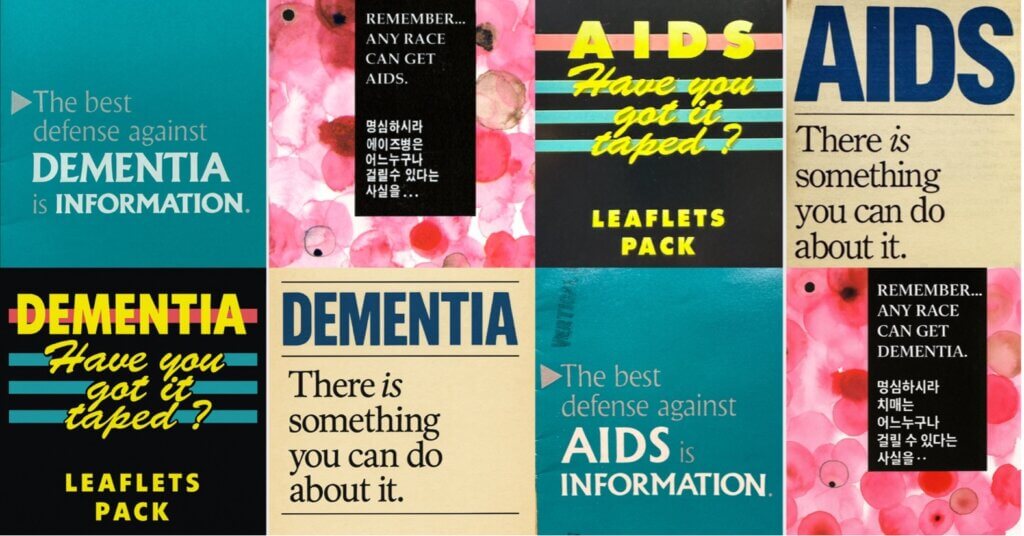
How do we get people to engage with a topic they’re terrified of? How do we replace fear with action and resources? How do we empower the community through media? The answer is in the WE.
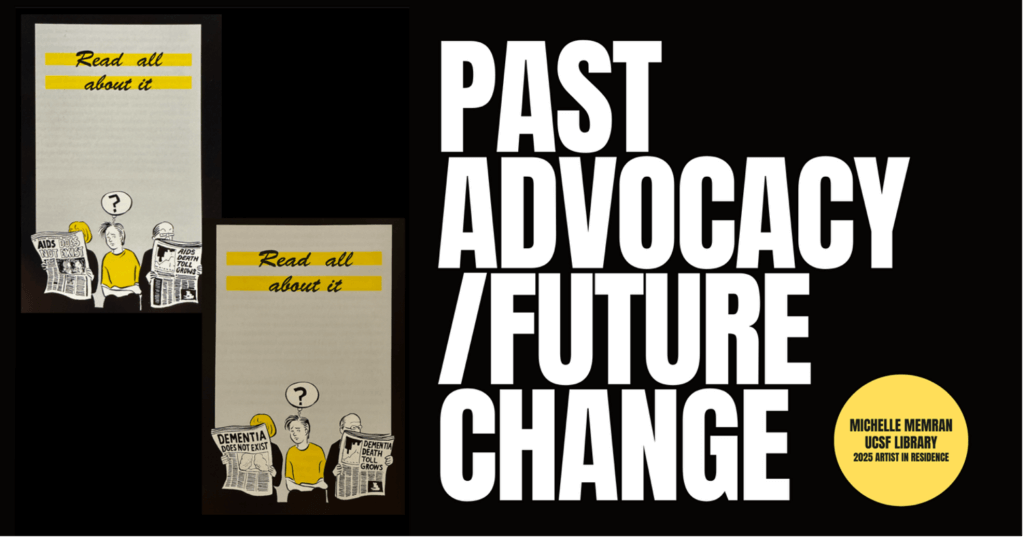
I’ve officially begun the second half of my year as the 2025 UCSF Library Artist in Residence, where I’ve been working with the HIV/AIDS Epidemic Collection. My project, Past Advocacy/Future Change, examines how early advocacy materials and strategies from this pivotal movement in HIV/AIDS history can help reshape public health messaging for Alzheimer’s and related dementias.
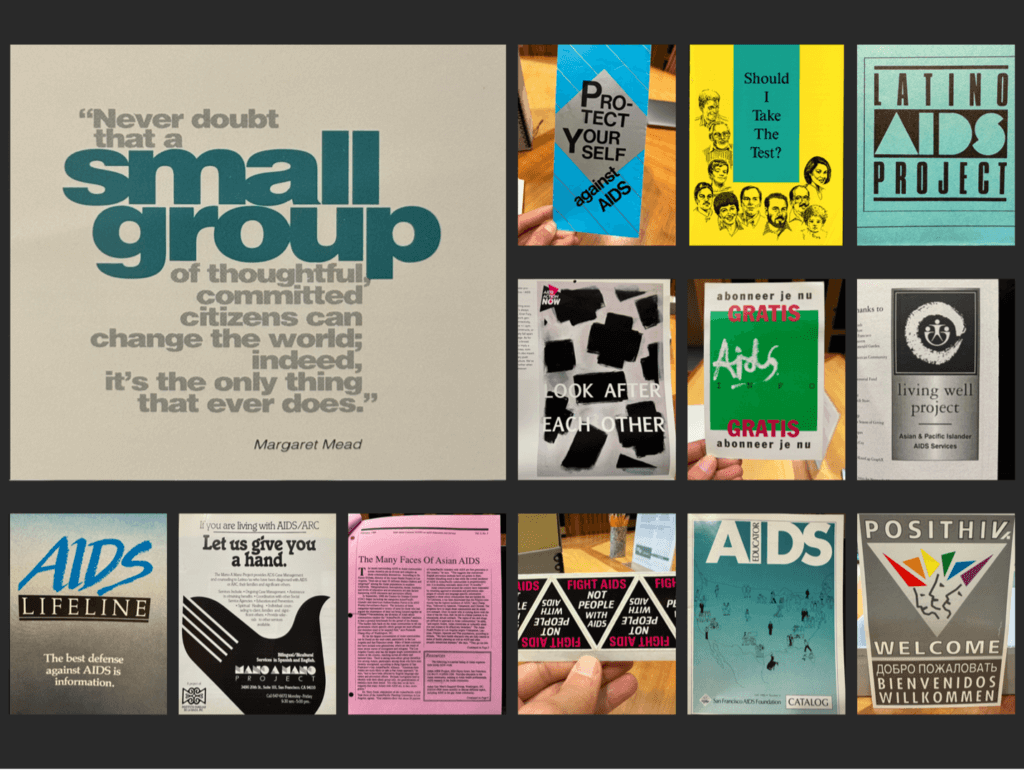
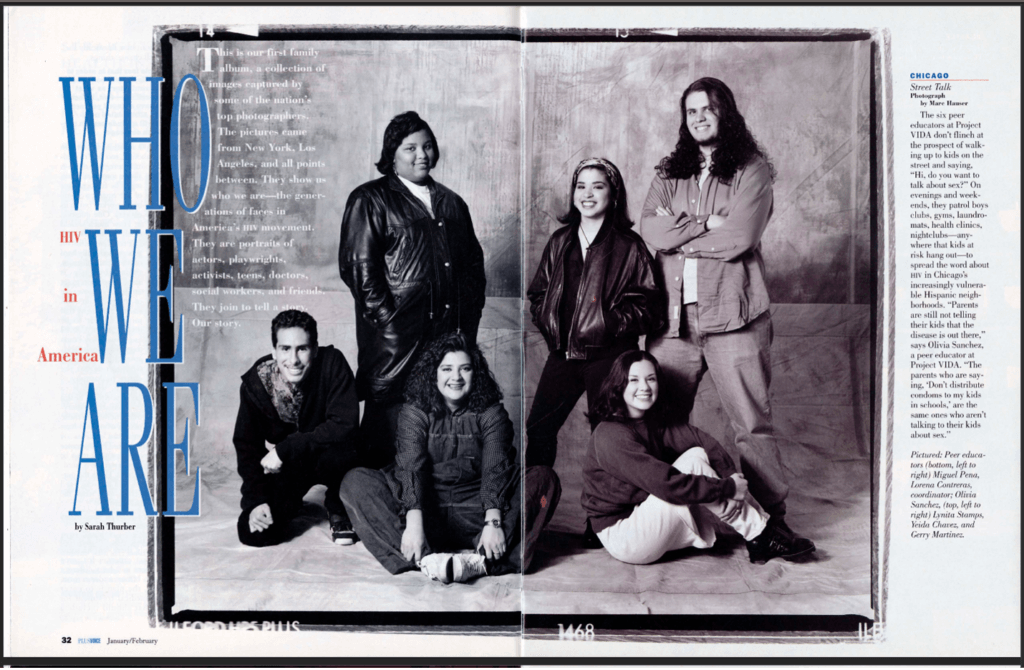
I’m endlessly gobsmacked by the UCSF Archives and Special Collections’ breadth, aesthetic daring, and community-minded ethos. Outreach and educational materials (flyers, posters, pamphlets, postcards, stickers, buttons) are bold and urgent, pairing vital information with artful, stigma-defying graphics. Designed to grab you instantly, these print ephemera from 1980 to the mid-90s inspire people: to get tested, find support, access treatment, regulate their nervous systems, build coalitions, work with neighborhood media, and push for policy change.
The archive also reveals the power of affinity networks and targeted messaging. Through hyper-local campaigns, HIV/AIDS activists and advocates offered resources and concrete actions to their communities in ways that felt accessible and personal, especially for those most affected. They created a resilient model of advocacy and accompaniment, all grounded in peer support, prevention, self-respect, and community care for people navigating a misunderstood and highly stigmatized syndrome.
Going through the archives is a heart-expanding experience; the love and the humanity are palpable.
Going beyond the collection
As part of this residency, I’ve also been talking with long-term HIV survivors and former AIDS Coalition to Unleash Power (ACT-UP) Golden Gate activists, who reflected on what made destigmatization and public action possible during the crisis. Previously part of ACT-UP San Francisco, ACT-UP Golden Gate formed in 1990 to prioritize direct action and mobilization for treatment access, drug assistance, and immune-based therapies. Some members shared that their activism wasn’t only driven by the urgency of the disease; it was also shaped by the clarity of the larger forces at play. Whether it was stigma and homophobia, government institutions, misinformation, pharmaceutical companies, or mortality itself, there was a need to connect locally and act collectively.
These larger forces are what often feel missing in dementia advocacy today. Alzheimer’s and related dementias (i.e., Lewy body, vascular, frontotemporal, and others) are frequently framed as private family tragedies, something shameful and hidden until after death. People are often diagnosed too late in the disease course, if diagnosed at all, denying many the time, support, financial resources, or public credibility needed to advocate for themselves.
What larger forces are those affected by dementias up against? But more importantly, for the campaign I’m creating: what are we for? I explored this topic in a recent video collaboration created for World Lewy Body Dementia Day, as part of our new video advocacy campaign, Let This Be a Symphony.
What’s next
For the next phase of my residency, I’m moving from research into making! I’ll be entering the UCSF Makers Lab to begin reproducing and reactivating select archival materials, including buttons, pamphlets, posters, postcards, and other tactile printed matter (experiments below).
I will share more here on the library website and on my Instagram as soon on as these pieces begin to take shape!