
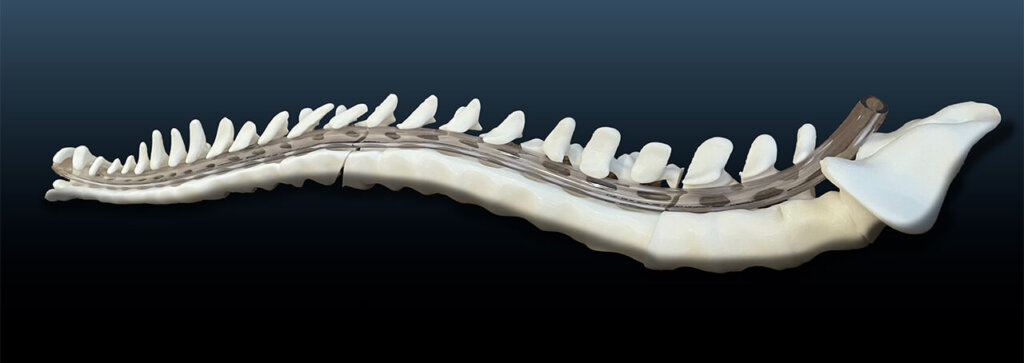

This week’s makers are Jaber Hanhan, MD, clinical fellow and Jeremy Juang, MD, PhD, with the Department of Anesthesia and Perioperative Care. Let’s take a look at what they made.
Q: What did you make?
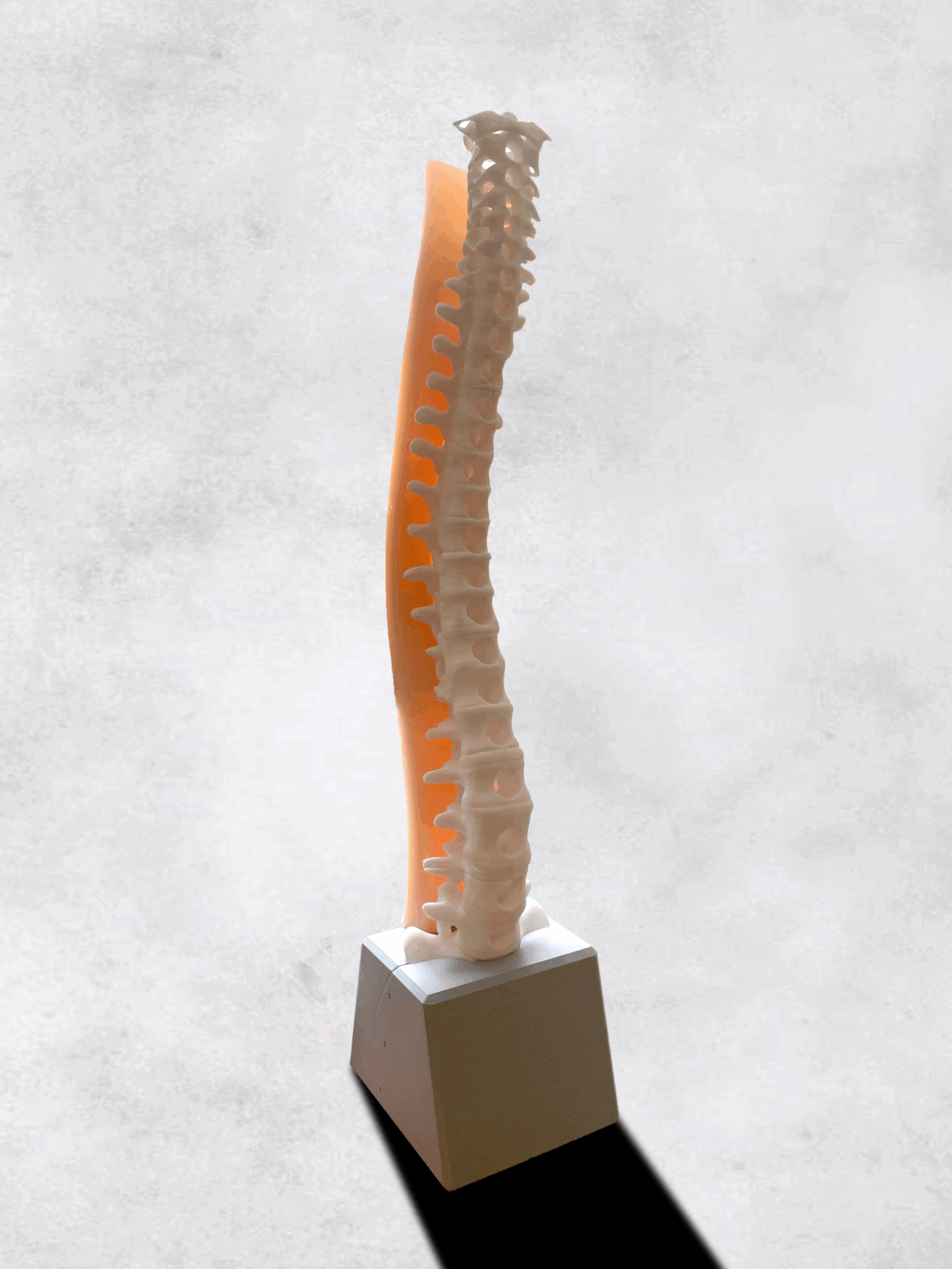
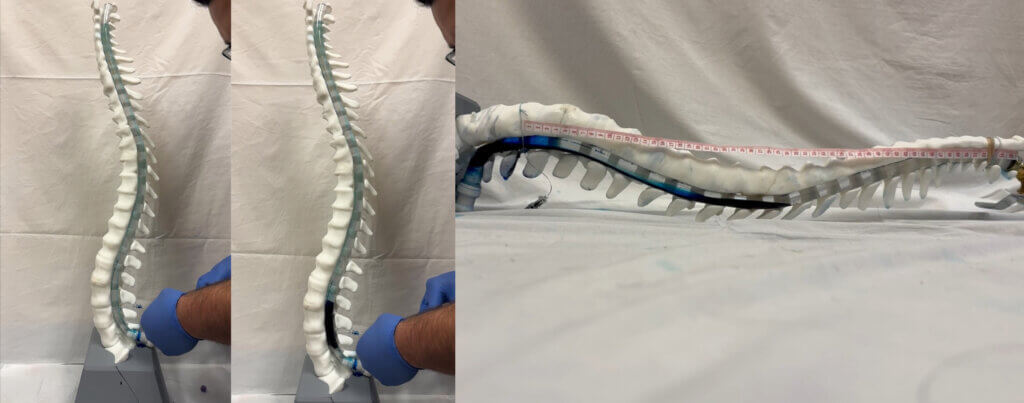
We built a life-size, anatomically accurate, 3D-printed spine model with a transparent subarachnoid channel to directly visualize how spinal anesthetic solution spreads.
Q: Why did you want to make it?
Spinal anesthesia is essential for cesarean delivery, but the spread of medication in cerebrospinal fluid can’t be visualized directly in patients. Existing models lacked anatomical fidelity. We wanted a model that was both accurate and practical for research and teaching.
Q: What was your process?
We partnered with the UCSF Makers Lab and consulted Scott, who designed the spine from open-source data. The model was refined in Blender, 3D-printed as an osseous (bone) structure, and paired with a transparent channel filled with fluid to mimic CSF (cerebrospinal fluid); dye injections were then performed and recorded to measure spread velocity and distribution.
Q: What was the hardest part of the process?
Capturing bodily accuracy was challenging. The model cannot fully replicate features like nerve roots, CSF pulsatility (the cyclic variation in blood flow and pressure due to the heart pumping), or tissue compliance, so balancing realism with practicality was the hardest aspect.
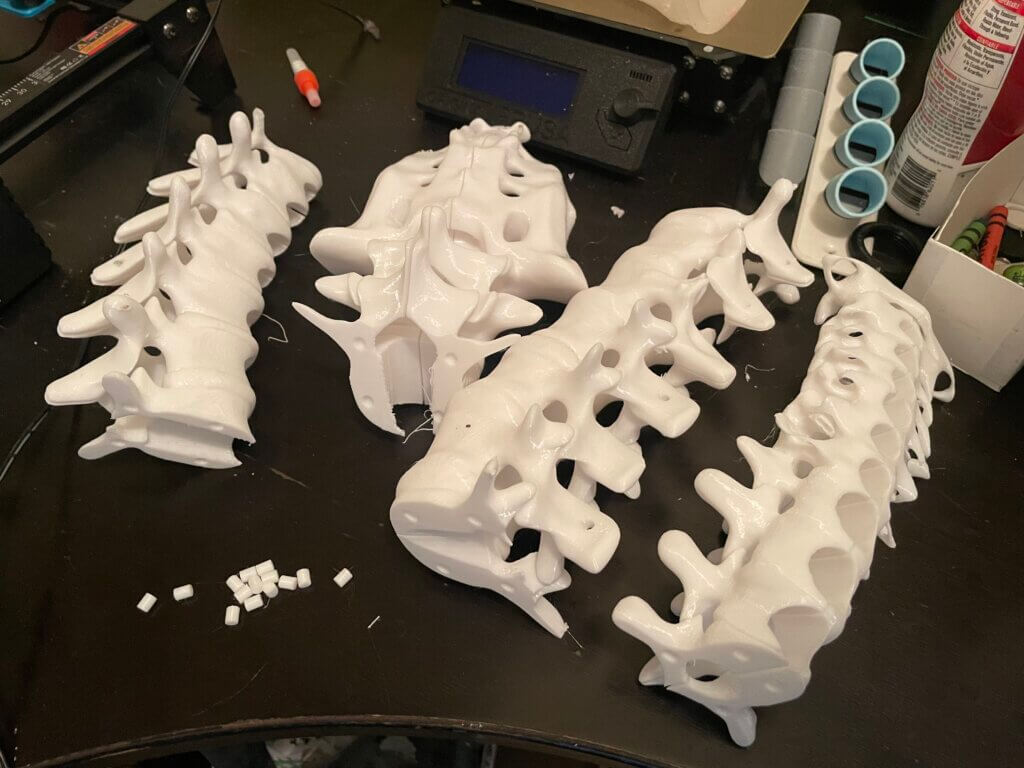
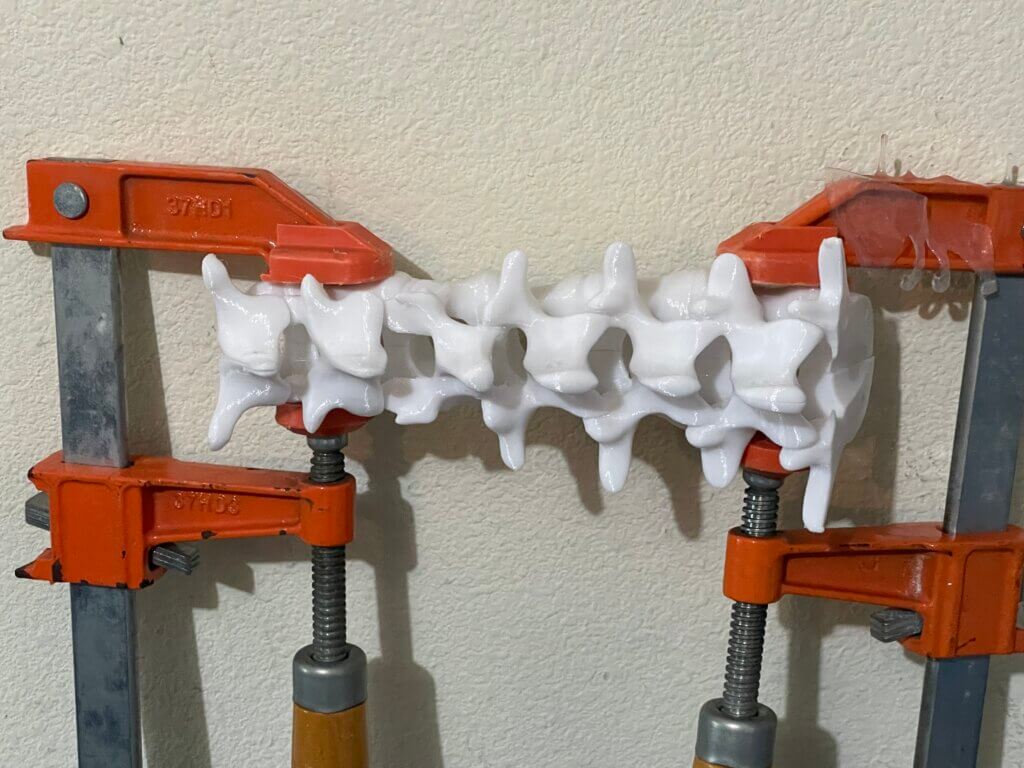
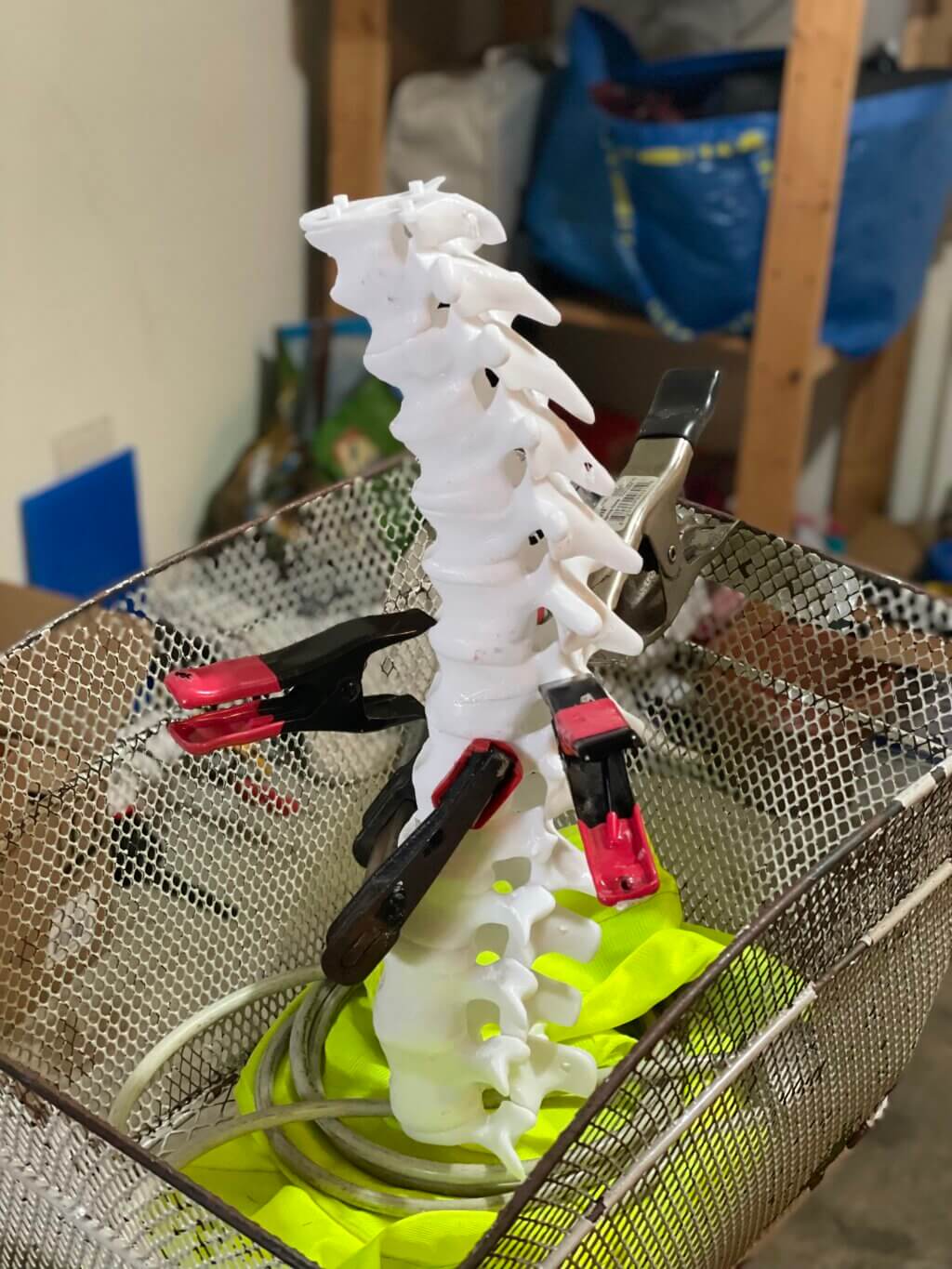
Scott mentioned that the production of the spine was a challenge due to the size of the model. The Bambu X1C 3D printer has a print volume of 256mm x 256mm, so the print was split into multiple parts and glued together using industrial adhesive and dowels for alignment.
Q: What was your favorite part of the process?
Seeing the dye spread in real time through the transparent channel was the most exciting. It allowed us to watch the dynamics of spinal anesthesia unfold—something not possible in patients.
Q: What do you want to make next?
We want to enhance the model by adding features such as a central cord analogue, flow pulsation to mimic cardiac and respiratory influences, and temperature control to better approximate bodily conditions.